
Lot Preparation Before Construction Begins
Commercial & Residential Land Clearing in Germantown for new construction site preparation and heavy vegetation removal
Raw land transitions to construction-ready sites when dense vegetation, stumps, and overgrown brush are removed before grading and excavation equipment arrives. ClearCut provides full lot clearance for builders, developers, and property owners preparing sites for new construction throughout Germantown and the Dayton metro area, addressing the gap between undeveloped acreage and the graded pad required for foundation work. Contractors working across Montgomery, Warren, Preble, Darke, and Greene counties need cleared ground before scheduling excavation crews, utility trenching, or stormwater management installation.
Land clearing removes the vegetative and root mass that interferes with grading, prevents proper compaction, and complicates underground utility installation. The process involves cutting and processing trees, grinding stumps below grade, and clearing brush and root systems to expose native soil for evaluation and engineering. On commercial projects, this phase determines whether additional fill, soil stabilization, or drainage measures become necessary before moving forward, making thorough vegetation removal the foundation of accurate site assessment.
Arrange a site consultation to evaluate vegetation density, stump count, and access routes for equipment staging..
What Proper Lot Clearing Requires
Complete lot clearance begins with removing standing trees, grinding stumps flush with or below final grade depending on project specifications, and extracting root masses that interfere with excavation or compaction. The clearing process accounts for equipment access, staging areas for material processing, and coordination with survey markers or property boundaries that define the work zone. On sloped or poorly drained sites, clearing also involves routing equipment to minimize soil compaction and rutting that complicates later grading work.
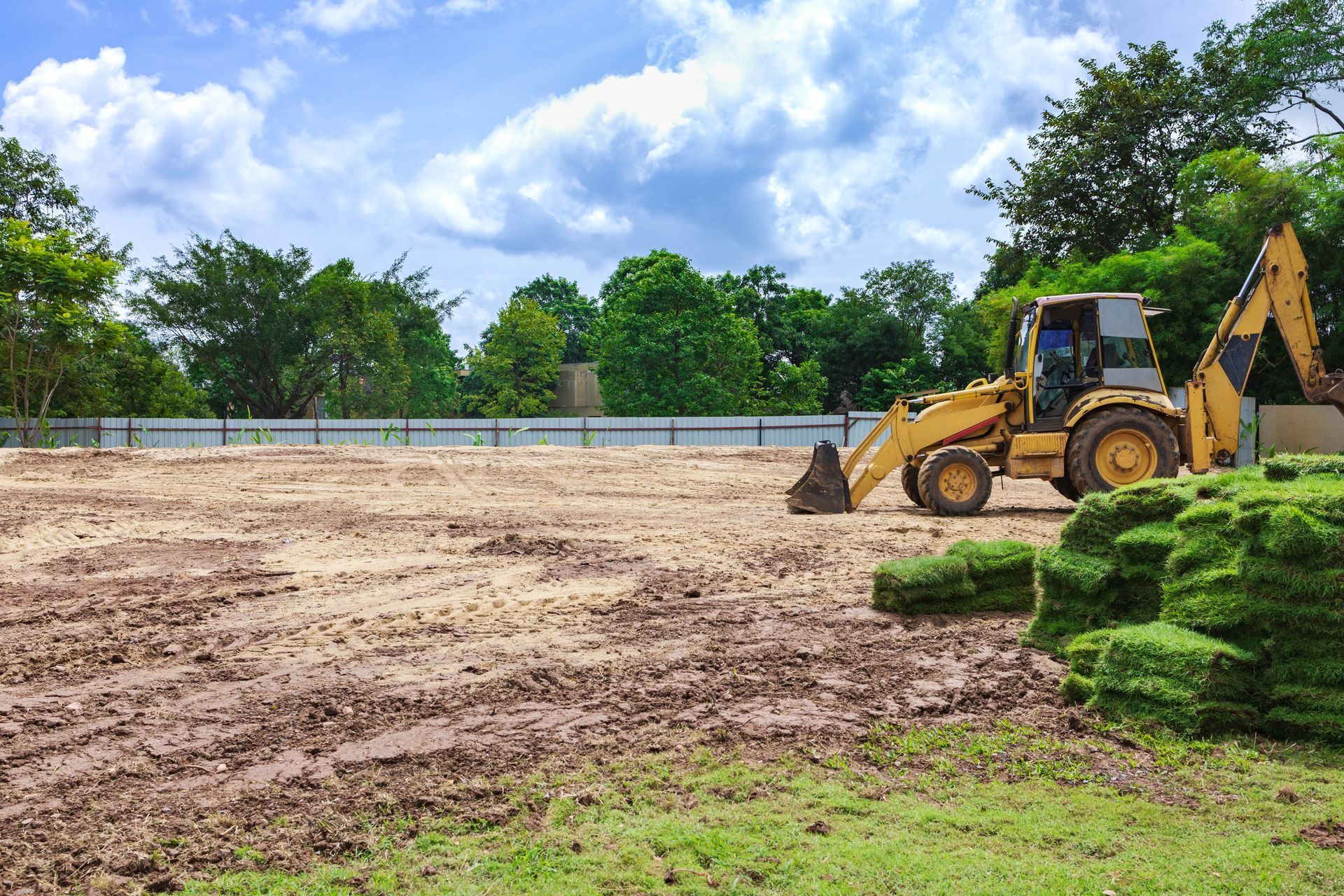
Once clearing is complete, you see exposed soil across the entire building footprint and access corridors, with stumps ground below the depth required for foundation excavation or slab placement. Survey stakes remain visible and undisturbed, equipment can maneuver without obstruction, and grading contractors can assess existing topography and drainage patterns without vegetation interference. The cleared lot reveals soil composition, rock outcroppings, wet areas, or other subsurface conditions that affect foundation design and site engineering decisions.
This service focuses on vegetation and stump removal rather than grading, fill placement, or drainage system installation. If your project requires soil relocation, retention pond excavation, or utility trenching, those phases follow after clearing is complete and often involve separate contractors with specialized earthmoving equipment. Clearing establishes the baseline condition for all subsequent site work but does not include subsurface preparation or final grade establishment..
Questions Builders and Property Owners Ask
Commercial and residential clients frequently need clarity on timelines, project scope, and coordination before clearing begins.
What happens to cleared vegetation and stumps?
Material is either processed into mulch and spread on-site if space allows, or hauled off-site depending on project requirements, site size, and whether the developer wants clean soil exposure or erosion-control mulch coverage during the next construction phase.
How deep are stumps ground for new construction?
Stumps are ground six to twelve inches below final grade for most residential projects, or deeper if foundation footings, utility lines, or paved surfaces require additional clearance as specified by engineering plans.
Can you clear around wetlands or protected areas?
Clearing stops at marked boundaries for wetland buffers, conservation easements, or tree preservation zones; coordination with surveyors and environmental consultants ensures compliance with local regulations and permit conditions in Montgomery and surrounding counties.
How long does commercial lot clearing take?
Clearing duration depends on acreage, vegetation density, stump count, and access constraints; a typical one- to two-acre residential lot with moderate vegetation clears in two to four days, while larger commercial parcels or heavily wooded sites require proportionally longer timelines.
When should clearing be scheduled relative to other site work?
Clearing occurs after surveying and staking but before grading, excavation, or utility installation; scheduling clearing too early risks vegetation regrowth, while delaying it pushes back the entire construction timeline once permits and financing are in place.
ClearCut works throughout a one-hour service radius from Germantown, including Kettering, Dayton, and surrounding communities where builders and developers need reliable lot preparation before breaking ground. Contact ClearCut to review site plans, vegetation conditions, and project timelines for accurate scheduling and cost estimation.